


Are you tired of constantly feeling like you’re missing out on opportunities? Do you find yourself wondering how some people seem to effortlessly seize every chance that comes their way, while you’re left watching from the sidelines? If so, you’re not alone.
Many individuals yearn for a way to break free from the cycle of missed opportunities and take control of their lives.
In this article, I will explore two simple strategies that can help you avoid losing out on valuable experiences and maximise your chances of success.
In This Article
ToggleStrategy 1: Embrace a Growth Mindset
A growth mindset is a belief that one’s abilities and intelligence can be developed through dedication and hard work. Unlike a fixed mindset, which assumes that intelligence and talents are fixed traits, a growth mindset recognises that skills and capabilities can be improved with effort and perseverance. It is an empowering belief that fosters a desire for growth, learning, and personal development.
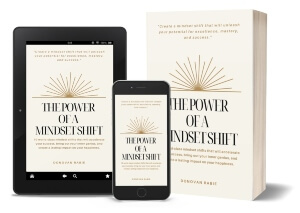

10 world-class mindset shifts that will…
~ Accelerate your success.
~ Bring out your inner genius.
~ Create a lasting impact on your happiness.
Price From: $5.18
The benefits of a growth mindset:
Increased resilience and adaptability in the face of challenges: Embracing a growth mindset equips individuals with the resilience to overcome obstacles and adapt to changing circumstances. Rather than being discouraged by setbacks, those with a growth mindset view challenges as opportunities for growth and learning. They understand that effort and perseverance are essential ingredients for personal and professional success.
Willingness to learn from failures and setbacks: A growth mindset encourages individuals to view failures and setbacks as valuable learning experiences. Instead of dwelling on the negative aspects, those with a growth mindset analyse their mistakes, extract lessons from them, and use this knowledge to improve. By embracing failure as a stepping stone to success, they become more resilient, determined, and motivated to achieve their goals.
Openness to new experiences and continuous personal development: Individuals with a growth mindset possess a natural curiosity and openness to new experiences. They actively seek out opportunities to expand their knowledge, develop new skills, and challenge themselves. By continuously engaging in personal development, they enhance their abilities, broaden their perspectives, and increase their potential for success.
Practical steps to cultivate a growth mindset:
Embrace challenges and see them as opportunities for growth: Rather than shying away from challenges, actively seek them out. Embrace the chance to step outside your comfort zone and tackle new tasks. Recognise that facing challenges head-on provides an opportunity for personal growth and development.
Adopt a positive attitude towards failure and view it as a learning experience: Shift your perspective on failure. Instead of seeing it as a reflection of your abilities, view it as a natural part of the learning process. Embrace the lessons that failure offers, analyse what went wrong, and use this knowledge to make improvements in the future.
Develop a love for learning and seek out new knowledge and skills: Cultivate a thirst for knowledge and a passion for continuous learning. Take the initiative to acquire new skills, explore different subjects, and stay updated with industry trends. Engage in activities that challenge your intellect and stimulate personal growth.
Surround yourself with supportive and growth-oriented individuals: The people you surround yourself with have a significant impact on your mindset and beliefs. Seek out individuals who share a growth mindset and inspire you to achieve your full potential. Engage in discussions, collaborate on projects, and learn from those who encourage personal growth and development.
By embracing a growth mindset and incorporating these practical steps into your life, you can transform your approach to challenges, failures, and personal development. The belief that your abilities can be developed through dedication and hard work will empower you to overcome obstacles, learn from setbacks, and continuously strive for improvement. Remember, a growth mindset is not just about what you achieve; it’s about the journey of growth and the limitless possibilities that lie ahead.
Strategy 2: Take Calculated Risks
The importance of taking risks:
Opportunities often come with inherent risks: It is important to recognise that opportunities for growth, success, and achievement often come hand-in-hand with risks. By embracing the idea of taking calculated risks, you position yourself to capitalise on these opportunities, knowing that the potential rewards outweigh the potential drawbacks.
Stepping out of your comfort zone can lead to personal and professional growth: Staying within the confines of your comfort zone may provide a sense of security, but it also limits your growth potential. Taking calculated risks involves pushing past your boundaries and embracing new challenges. By doing so, you expand your skills, knowledge, and experiences, leading to personal and professional development.
Taking calculated risks can open doors to new possibilities: Playing it safe and avoiding risks may result in a comfortable, predictable life. However, it also means missing out on the potential for breakthroughs, discoveries, and transformative experiences. Taking calculated risks exposes you to new opportunities, broadens your horizons, and opens doors to possibilities you may never have imagined.
Steps to take calculated risks:
Assess the potential rewards and drawbacks of the opportunity: Before embarking on a risky endeavour, carefully evaluate the potential benefits and drawbacks. Consider the potential rewards and how they align with your goals and aspirations. Likewise, identify and assess the potential drawbacks and their potential impact.
Gather relevant information and conduct thorough research: Make informed decisions by collecting all available information related to the opportunity. Research the market, seek advice from experts, and gather data that will enable you to evaluate the feasibility and potential outcomes of taking the risk.
Plan and evaluate different scenarios: Develop a comprehensive plan that outlines the various scenarios and outcomes associated with the risk. Consider best-case, worst-case, and most-likely scenarios. Evaluate the potential impact of each scenario on your goals, resources, and overall well-being.
Develop contingency plans to minimise potential negative outcomes: While risks may involve uncertainty, it is essential to identify potential negative outcomes and develop contingency plans to mitigate them. Anticipate obstacles and devise strategies to overcome them. This proactive approach reduces the potential negative impact of the risk and increases your chances of success.
Trust your instincts and make informed decisions: Alongside gathering information and evaluating scenarios, trust your instincts. Intuition often plays a vital role in decision-making. Combine your intuition with the knowledge and insights you have gained through research and analysis to make informed and calculated decisions.
Embrace the possibility of failure but learn from it: Taking risks inherently involves the possibility of failure. Rather than fearing failure, embrace it as an opportunity for growth and learning. If the risk does not yield the desired outcome, reflect on the experience, identify lessons learned, and apply them to future endeavours. Failure can provide valuable insights that lead to future success.
By embracing the concept of taking calculated risks and following these steps, you can navigate uncertainties, expand your horizons, and seize opportunities that have the potential to transform your life. Remember to approach risks strategically, evaluate potential rewards and drawbacks, gather information, and plan for contingencies. Trust yourself, embrace the unknown, and be prepared to learn and grow from both successes and failures.
Conclusion
In conclusion, we have explored two powerful strategies that can help you break free from the cycle of missed opportunities and maximise your chances of success. The first strategy is embracing a growth mindset, which involves believing in the potential for personal development through dedication and hard work. By adopting this mindset, you gain increased resilience, the willingness to learn from failures, and an openness to continuous personal development.
The second strategy is taking calculated risks. We discussed how risks are often accompanied by opportunities and how stepping out of your comfort zone can lead to personal and professional growth. By following a systematic approach that involves assessing potential rewards and drawbacks, gathering information, planning, and developing contingency plans, you can navigate risks while minimising negative outcomes.
Implementing these strategies in your daily life offers numerous benefits. You become more resilient in the face of challenges, open to new experiences, and better equipped to seize opportunities. You develop a proactive mindset that empowers you to learn from failures, adapt to changing circumstances, and continuously improve yourself.
Now is the time to start applying these strategies immediately. Embrace challenges, view failure as a learning experience, and foster a love for continuous learning. Surround yourself with supportive and growth-oriented individuals who inspire and uplift you. Evaluate opportunities, gather information, trust your instincts, and take calculated risks. By doing so, you will unlock new possibilities, broaden your horizons, and embark on a transformative journey of personal and professional growth.
Remember, by adopting a growth mindset and embracing calculated risks, you can transform your life and never miss out on valuable opportunities again. Success favours those who are proactive and willing to step out of their comfort zones. So, embrace these strategies, take action, and embrace the limitless potential that lies within you.
Now, it’s time to seize the day and create a future filled with endless possibilities. Start today and watch as your life unfolds in remarkable ways.
As a business owner, you know that competition can be tough. With so many other companies vying for the same customers, it’s easy to feel like you’re constantly losing out. But what if we told you that there are two simple strategies you can use to never lose out again? In this article, we’ll share those strategies with you and explain how you can use them to gain a competitive edge in your industry.
Strategy 1: Know Your Customers Better Than Anyone Else
One of the biggest mistakes that businesses make is assuming they know what their customers want. They rely on assumptions and guesses instead of actually taking the time to get to know their customers. But if you want to stay ahead of the competition, you need to know your customers better than anyone else.
To do this, start by collecting data on your customers. Use tools like surveys, customer feedback, and website analytics to gather as much information as possible about their preferences, behaviors, and pain points. Analyze this data to identify patterns and trends that can help you make informed decisions about how to improve your products and services.
Another way to get to know your customers is to engage with them directly. Use social media, email, and other communication channels to ask for feedback and respond to their questions and concerns. By building relationships with your customers and showing that you value their input, you’ll gain valuable insights into their needs and wants.
10 world-class mindset shifts that will…
~ Accelerate your success.
~ Bring out your inner genius.
~ Create a lasting impact on your happiness.
Price From: $11.49
Strategy 2: Focus on Your Unique Value Proposition
Another mistake that many businesses make is trying to be everything to everyone. They offer a wide range of products and services without really differentiating themselves from their competitors. But if you want to stand out and never lose out again, you need to focus on your unique value proposition.
Your unique value proposition is what sets you apart from your competitors. It’s the reason why customers choose your products or services over someone else’s. To identify your unique value proposition, start by asking yourself these questions:
- What do you offer that your competitors don’t?
- What are your core strengths and competencies?
- What problems do you solve for your customers?
Once you’ve identified your unique value proposition, make sure it’s front and center in all of your marketing materials. Use it to differentiate yourself from your competitors and highlight the benefits of working with your company.
Conclusion
By following these two simple strategies, you can gain a competitive edge and never lose out again. By knowing your customers better than anyone else and focusing on your unique value proposition, you can differentiate yourself from your competitors and offer something truly valuable to your customers. So take the time to collect data, build relationships, and identify your strengths. Your business will thank you for it.
Remember, these strategies are just the beginning. There are many other things you can do to improve your business and stay ahead of the competition. But by implementing these two strategies, you’ll be well on your way to success.
 Thanks for reading my blog post! You Rock!
Interested in what I do? I help people to discover, develop and use their resources to empower themselves & create change in their lives.
Need my help? Simply follow this link, send me a message and I’ll get back to you asap.
Donovan – Life Coach – 078 952 0328